Schools catapulted into a different era
A tiny virus has managed to bring about a worldwide revolution that leaves the field of education anything but untouched. It shows how a small force can set in motion a chain of events that obliges schools to change their sights. With the force of a catapult, schools have landed in a different era. Not by way of a five-year plan, but simply from one moment to the next. Immediately.
Head teachers, teachers, parents and the children they care for are left with many questions. To my surprise, those questions are hardly ever about the practical handling of the corona measures, but about what is most valuable, namely the essence. What is the essence? Which tools are teachers looking for in order to integrate that essence? Which insights from the corona era are they taking with them into the school environment?
Schools are on a voyage of discovery towards the essence.
From surviving to living
Crisis and fear walk hand in hand through the schools like two good friends. Teachers, methods, systems, assessments — everything is flung upside down. Even the full-time presence of pupils had to give way. It was no longer only about teaching; going to school became a matter of life and death. Our lives depend on it. An idea we would never have connected with teaching in the past. That is why policymakers, school leaders and teachers are looking for a way to turn surviving into living.
Switching gears at speed
You have no idea what the next step is going to be, even though written procedures are available by now. Everything can change in the space of a day.
Do you, as a teacher, have the flexibility needed to deal with the changing situation? Are you swamped by stress and fear? Or does it actually stimulate your creative intelligence? You have to switch gears whether you want to or not. At speed, accompanied by unexpected and unfamiliar factors that will undoubtedly keep cropping up. Can you see the advantages of it?
A whole range of opportunities for growth
A crisis usually surfaces when the signals calling for change have gone unseen and misunderstood for a long time. It challenges you, confronts you, makes you search and find. In the longer term it gives energy, new strength and new patterns. Can we say that unexpected and unprecedented opportunities for growth have been dropped into the lap of our schools, inviting you to broaden your view, to adjust your expertise, but above all to find a great deal of satisfaction? Is that not part of the essence of learning? Are you ready for the journey?
A teacher has the power to learn for themselves
As a teacher you are the person par excellence to delight in the learning process, because you possess a special quality: the power to learn for yourself. ‘Yourself’ is crucial here. Only what you have made your own can you pass on to your pupils with any value. So you have the power to convey the learning process, the result and all the intermediate steps it takes to your pupils. And it goes further still. You show them the power of learning and the rewarding emotions that go with it out of your own ‘learning power’. This gives pupils an appetite for calling on their own learning power, which benefits their well-being.
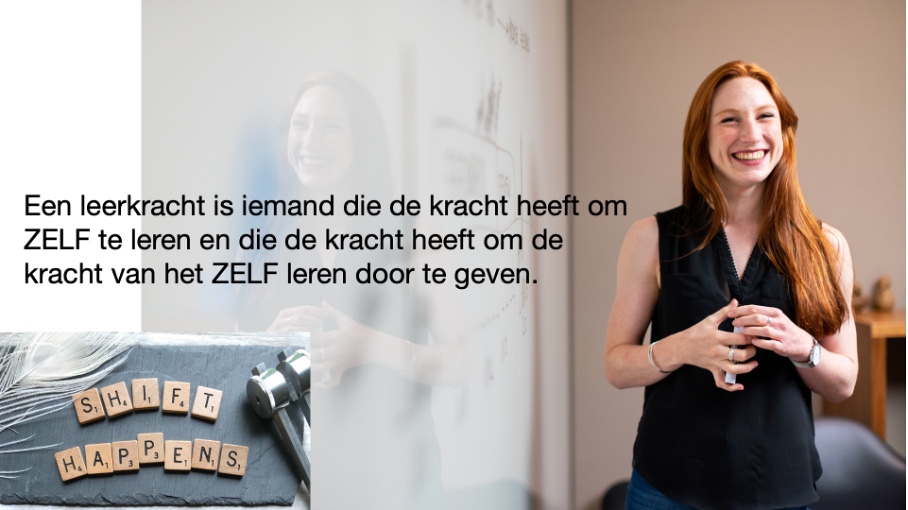
Shifting the focus from crisis to creation opens the gateway to great satisfaction.
Teachers, the golden raw material of a school
When teachers pool their learning powers, they create out of a crisis a brilliant framework in which schools reinvent their essence and fill it in with new shapes and colours that fit better with what today’s children really need. They shift their focus from crisis to creation and in doing so open a gateway to great satisfaction. At the same time this is a message for social policy: focus on the solution and not on the problem. The wealth, the golden raw material for this creative process, is already present in the school, and you are one part of it. Time to assess your golden value properly.

Fear and stress break your connection
Death, the sick, infection, economic consequences, worldwide, children in distress and the figures have been booming out of your media loudspeakers these past months. Ask yourself the following questions. What effect does that have on me? What happens in my body? To my breathing? My perception? My motivation? My creativity? The content of my conversations? The quality of my sleep? Do observe it for once. What do you notice?
Spreading fear has a narrowing effect on the way you function: your thinking, your suppleness, your creativity and your intuitive perception all contract. Your attention is pulled towards external factors. You start to find it harder to sleep, to eat, or your body starts showing complaints. Your (underestimated) breathing goes out of balance, which breaks the connection with yourself. This is a very common complaint among teachers. And rightly so, because a broken connection disturbs both your quality of life and your teaching.
When your attention is pulled towards external factors, the connection with yourself is put at risk.
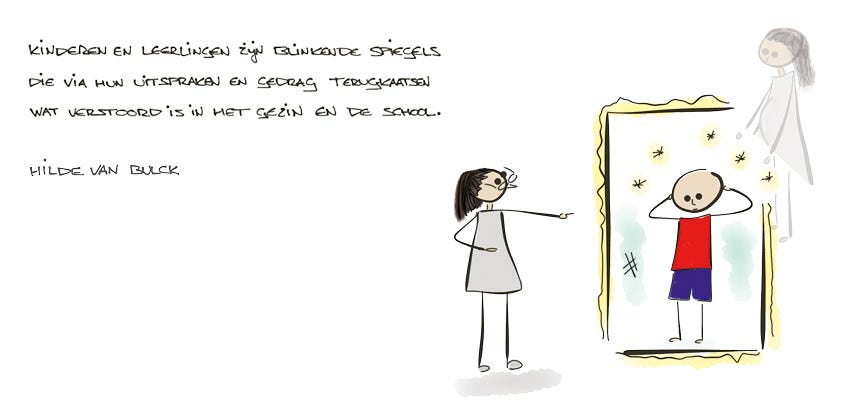
Children reflect back, all by themselves, whatever is out of balance
What do one-sided, fear-mongering news reports and panicky reactions from adults do to children? ‘If the grown-ups are this frightened, then who am I supposed to turn to for support?’ goes through their little heads. They are more finely tuned than a barometer registering the slightest change in the weather. That sensitivity plays tricks on them. If the emotions they pick up from frightened adults are not channelled, they lead to difficult behaviour and to trouble concentrating and learning. Children hold up a shining mirror to us: fear does not lead to the desired result. They need something else. What do you need?
In the book De eigenwijze kikker (The Headstrong Frog) these children are described as interference transmitters who, with their powerful antennae, pick up information from a wider environment and broadcast it inside the school. [1] They possess a sensitivity that detects every lie, that unmasks every insincerity, every inauthenticity. Like a sponge they soak up the abundant stimuli that burden their nervous system. If that burden is not detected and dealt with adequately, it produces displeasure, apathy, aggression or flight from the body in the pupil. To bring them back to the present and to their learning process, you as a teacher have to be present in the here and now. Otherwise it becomes a difficult job.
Anyone can learn it, and it is not even that hard.
The explorer, a fascinating, lively and authentic person
Over the past two years the explorer in you has woken up. That awakening acts as a powerful antidepressant and protects you from drudgery and loss of motivation. An explorer maps out their own path and takes on adventures as they present themselves. They let go of control and apply strategies that fit the crisis. They may have a goal in mind, but chances are they will discover something quite different. Pupils who see the explorer in their teacher want nothing more than to learn for themselves. They know that, out of your inner freedom, you dare to push your boundaries. They want to learn how to do that themselves, so as to get to know who they are. De eigenwijze kikker says that the search for oneself is the number-one learning process every person wants to embark on. [2] Young pupils have that goal too. Is that not what school is about? What the essence is about? Knowing yourself. Learning to live? Or do we limit ourselves to learning to learn?
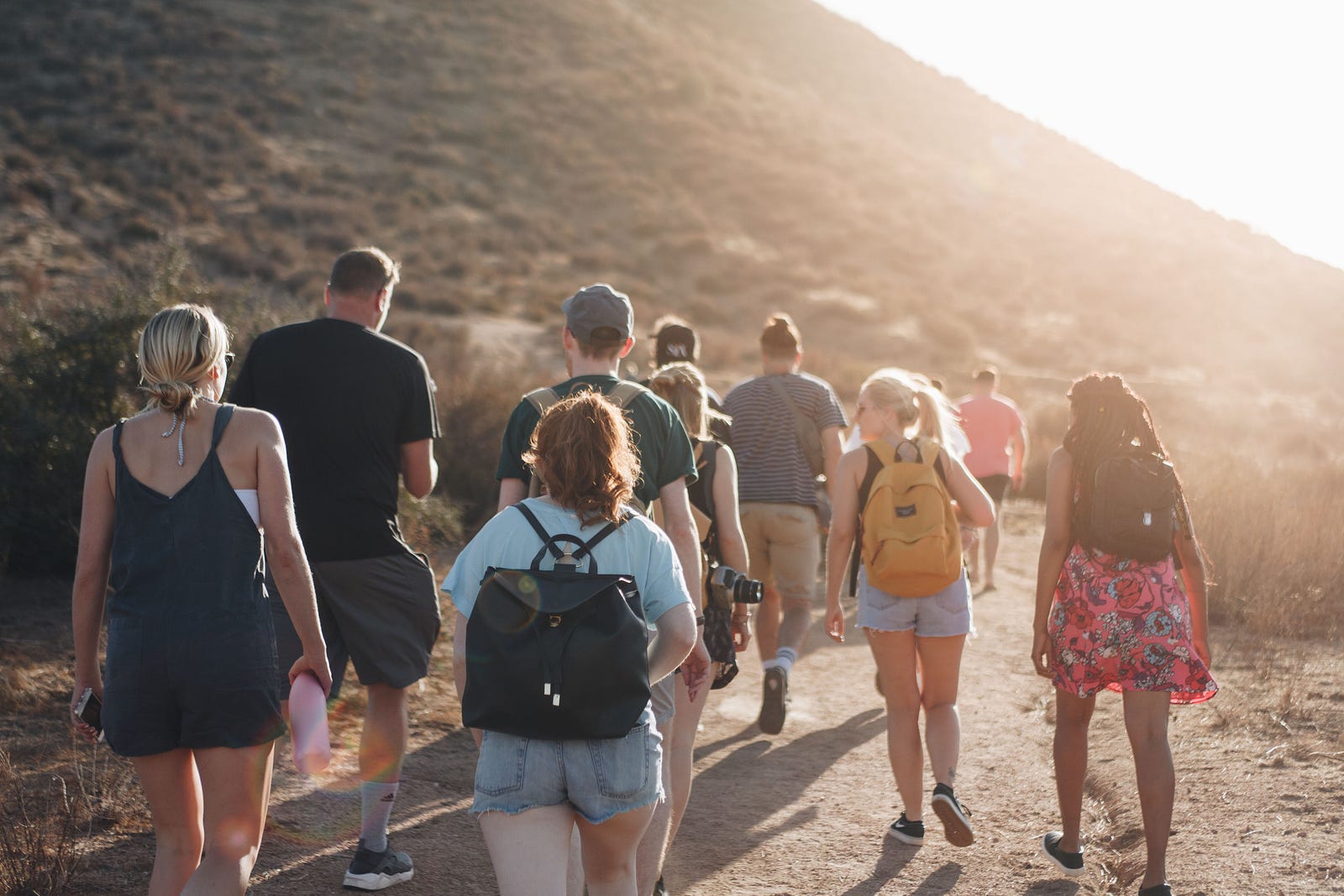
Pupils who see the explorer in their teacher want nothing more than to learn for themselves.
A nourishing spot for fears and small joys
Because of the creation of bubbles, the class of Miss Vera in the second year of primary school has been halved.
‘I am discovering the advantages of more physical space per pupil,’ she says in a happy voice. ‘It is simply much calmer. There is more room and the desks are tidier. I now have the time to discover other talents in my children. That is how I noticed that a child who is not good at arithmetic can sing beautifully. What I offer them now fits their needs better.’ She hesitates for a moment before going on.
‘The philosophy-of-life subjects have been scrapped at our school. How can you wipe living and reflecting off the map? At this moment of all moments? It is a nourishing little spot where children can come with their fears and their small joys.’
Asked whether she has become more creative, she answers playfully: ‘When we still had to wear face masks, I made myself up in a bright colour every day. The children thought it looked lovely. Because my smile was hidden behind my mask, I taught them to look at the little wrinkles round my eyes and at my eyebrows.’
The visits gave me a wonderful feeling, as if it mattered.
Learning through play is now high on my agenda
Miss Kristel from the fifth year of primary school feels safe in her classroom.
‘Most of the children feel good in their own skin, and I deliberately build on that,’ she says. ‘The learning then makes better progress. Before the corona crisis they were in a faster rhythm. Too many hobbies and too many different kinds of input made them more susceptible to stress. Because of the measures the rhythm was slowed down and they have become calmer. That makes learning easier for them.’
Something has struck her. ‘The children are no longer used to sitting still for long. They need more movement and more freedom. I give them that, but it is new for me. I now regularly slip in movement breaks in which we practise the subject matter. For instance, we play with a ball outside and learn to count in French. Playful learning is now higher on my agenda.’
The pupils have become more independent
‘Because of the lockdown, independence has grown both in my pupils and in me,’ Miss Kristel observes. ‘Together we have learned many other things. Digitally I have learned a great deal. I am not letting that go to waste; I am taking it with me into my lessons. The children are also more fluent now at working independently. That is a nice bonus. Even so, there is a difference. At home they did what was asked of them, but without integrating it. In the classroom it works better.’
Intrinsic motivation
‘Because of the lockdown I suddenly realise why I chose this job. I did know it, but it has never landed so confrontingly,’ Miss Kristel concludes with emotional pride. ‘The contact, the sensing of each other, the openness towards one another… It feels so wonderful. Like an inner talent, an intrinsic motivation…’
Wonderful visits to pupils
Miss Anja teaches the first year of primary school. ‘It felt like my task to pay the pupils a visit at home from a safe distance. I was driven by the need to see them. My visits gave parents the chance to ask questions. The children themselves were overjoyed. Some were a real torrent of words, or showed me a photo album or a tooth that had fallen out.
‘The visits gave me a wonderful feeling, as if it mattered. I felt happier and lighter, and had far more energy. I could have carried on into the night.’
With minimal effort, you have maximum reach.
The paper-thin border between school and home
‘With six- and seven-year-olds you need the parents’ help to arrange a digital meeting. So behind every child sits a parent, but the parents of the other children are present too. We talked about how the little ones were feeling. One child said that it was not feeling good at home. And then it went very quiet. I no longer knew what to say. The dad was moved and the other parents said nothing. That was an uncomfortable moment.’
That was when Miss Anja came into contact with the paper-thin border between school and home, a sensitive and delicate border.
‘At school you can take a child like that aside for a moment, but I had forgotten that in a digital meeting there is no privacy. I contacted the dad afterwards and now I set out a framework with the parents in advance,’ she sighs. ‘I do not want to go through that a second time.’
The teacher came into contact with the paper-thin border between school and home.
The forgotten meaningfulness of everyday school practice
Because of the lockdown we have embraced essential things again. We were given unique time to recover from our overloaded diaries, to come back to ourselves and to do things we would otherwise push aside. At last we could slow down and follow a natural pace. Family, communication, emotional and physical contact rose sky-high in value. We looked after ourselves more while at the same time caring for others in a way we had never done before. A sense of connectedness grew. With personal space enlarged, the reduction in external stimuli was bliss. And nature reminded us that we can recover quickly if we wish to. These insights are about forgotten meaningfulness in everyday school practice.
Tools from your inner wealth
So the rediscovery of the essence and of a conscious way of living is not to be found in external factors, but much closer to home: in your inner world. In there lies a rich treasure: your deep connection with who you are, your unique point of rest. They are extremely useful for your work in the classroom. And for your pupils. We are not used to working from there. We can no longer, however, fall back into the ways of the old paradigm of fear and stand by watching as so many teachers drop out. The golden raw material has to be supported and kept healthy.
In your inner world lies a rich treasure: your deep connection with who you are, your unique point of rest.
All learning is bodily
This is an important momentum. Are you willing to make a choice? Would you like to teach from that unique point of rest? Would you like to learn to teach from your physical sensing? Sounds like gibberish? And yet you already know it. From tasting something as small as a strawberry, through listening to music that moves you, to the birth of your child and the countless events in between. You experienced them all physically. That experience was a barometer of whether something was good or not. You may not have given it any thought yet, but all learning is bodily[3]. Learning at school too. A child who is bodily present will learn more easily. A teacher who is bodily present will have smoother classroom management. We are now learning to apply it consciously.
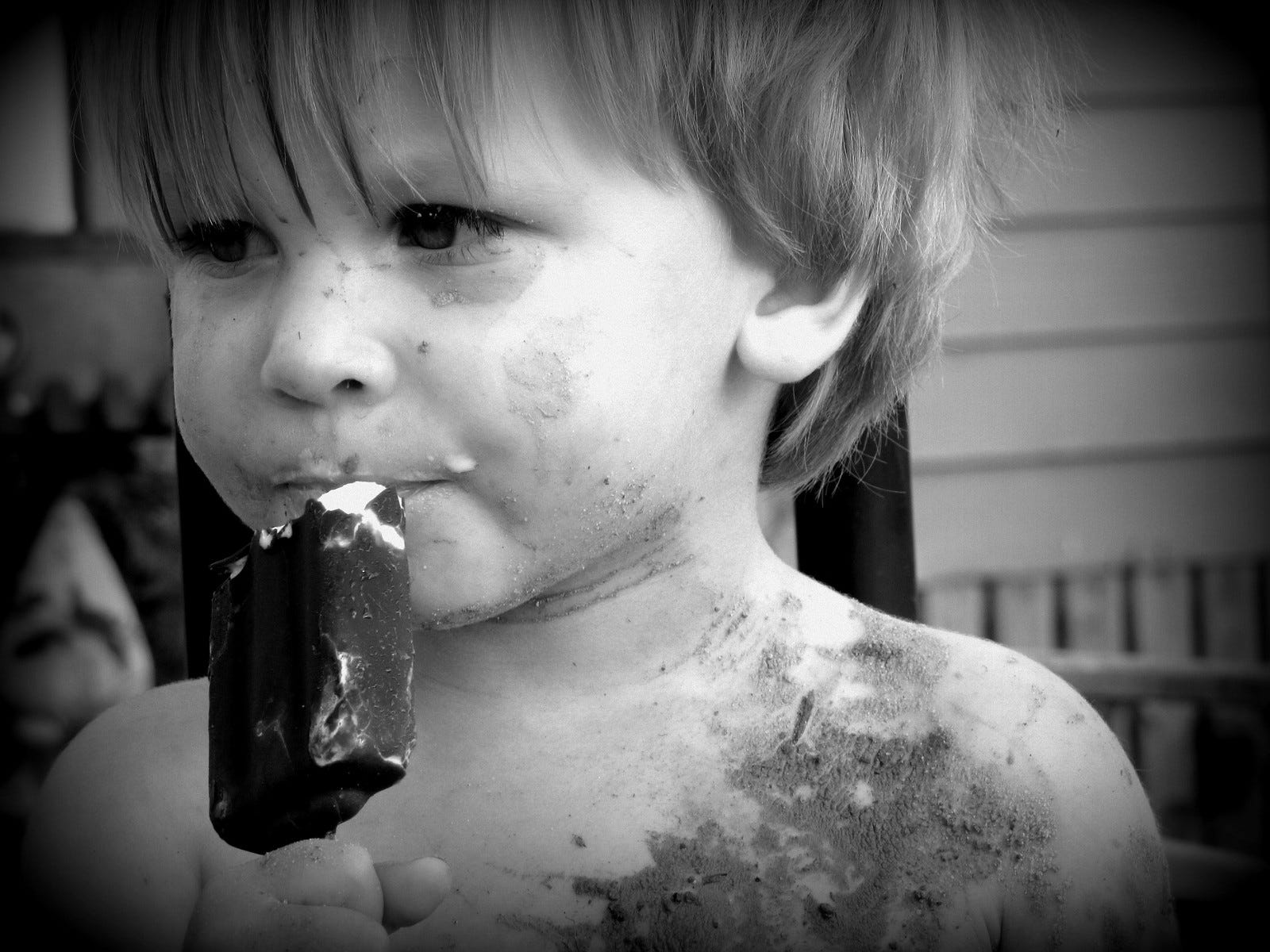
All learning is bodily.
What? The simplicity of Teaching by being
Teaching by being is a way of working that starts from your unique point of rest. It is a cross-curricular application and easy to learn. It grew out of the conscious self-development of the writer of this article over many years of working with her classes. Teaching by being is applied in primary as well as in secondary schools by teachers who have followed the training. It can be used for giving lessons as much as for following them. It provides a solid foundation for anyone who wants to live, learn and work from a powerful life energy.
Teaching by being is a connecting way of working that opens the heart and has an impact in several directions. When you, as a teacher, apply Teaching by being for yourself, your changed attitude has an effect not only on you but also on your pupils, your colleagues and your head teacher, and vice versa.
When you put Teaching by being to work you notice, just as during the corona period, that all the processes in a school are connected with one another. With minimal effort, then, you have maximum reach.
You always have Teaching by being to hand. You do not have to study complicated things for it. It can be used in virtually any circumstances. It is not a theoretical concept, but is based on the intelligence and the perceptive capacity of your own body, which is faithful to the truth. The body does not lie. You know that. You notice it, for example, in the way your body reacts to favourable and unfavourable situations.
The approach is rather exceptional, because in education we are used to betting on mental intelligence. By learning to understand and use the bodily and emotional intelligence that is present in everyone, many classroom and learning problems can be avoided or reduced. [4] That frees up extra time. Are you ready for a different way of looking and acting? Would you like to know how?
Teaching by being is a connecting way of working that opens the heart and has an impact in several directions.
What? The wheel of being, a clear peg to hang it on
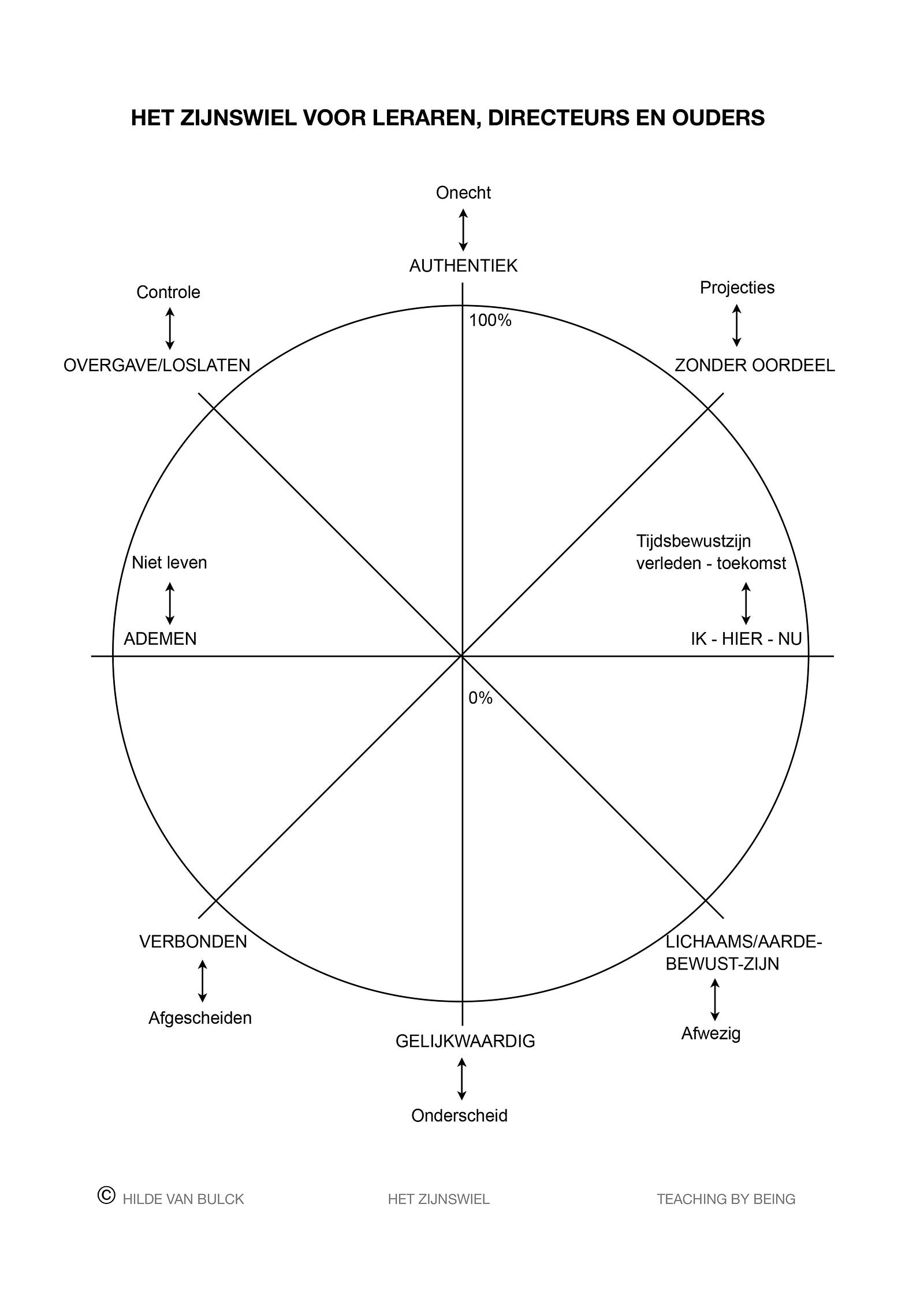
Teaching by being is a total experience, an experience of being, which is hard to break into parts. For the sake of better understanding, and because we like something to hold on to, the ‘wheel of being for teachers’ was developed. It consists of eight axes that you can learn to experience rather than reason out. The pupils, by the way, are very good at it themselves and are keen to have it, because they have a great need for the sense of safety that arises when you use bodily intelligence properly. [5] Most pupils are never taught anywhere to make contact with their inner calm. They are grateful for those short moments. In a matter of minutes their batteries are recharged and they can carry on with the lesson. A waste of time, critics will suggest. A gain in time and in learning, is my experience.
In De eigenwijze kikker you will find the full elaboration of the wheel of being. [6] It is also packed with playful exercises that equip you to teach from your physical awareness.
Teaching by being is a total experience for teachers and pupils.
Who? Teachers shift the focus
Although teachers carry a great deal of care for their pupils, the wheel of being asks you to do something you are not used to and that you may feel resistance towards. Instead of putting your attention on the pupil first and foremost, you bring the focus to yourself in the first instance. Shifting the focus makes you more present: more here, more now, more in your body, and with freer breathing.
It is not selfish — quite the opposite. Pupils adore teachers who really stand there. More pleasant behaviour and better learning results are your great rewards. And all that by using your body? You do not have to take my word for it; just let the explorer in you loose and simply try it. Below I go into how three of the axes of the wheel of being work, but first comes an example from practice.
I have never been able to do it and I never will
As a pupil, Dana was utterly frustrated in my lesson. She did not cooperate in any way at all. [7] My little tricks had no impact whatsoever. She would not be budged into taking part in my lesson. She had never enjoyed my subject, could not do it and never would. I had to come up with something, because the school year was still young and I was not planning to reach the end of it that way. In a conversation I had with her, I described her posture during my lesson. I demonstrated it with my own body. Every lesson she sat completely hunched up, arms and legs crossed, her long hair in front of her face. In the conversation she made it clear that she was not planning to cooperate in any way — until I asked her whether her one piece of cooperation during my lesson might be a change of posture. At that she was immediately interested and wanted to take on the experiment. By putting both feet on the floor and sitting up straight on her chair, she would feel her body better and have contact with the earth. By sitting up straight she would be able to breathe better and her digestion would go more easily. Her heart would be free to learn. By laying her arms down loosely she would be able to breathe better, and by moving her hair aside she would be able to make contact with what was happening in the lesson. I did not explain any more to her than I am doing now, but I did hold out the prospect that she would get better marks with this posture. During my lesson I applied extensively what I had asked of her, and more. I was 100% present. To cut a long story short, the result was that she began to cooperate, began to do assignments and scored ten out of ten, whereas she had never once in her school career achieved a pass in my subject. And above all: the example of one pupil inspired other pupils in my subject and in other subjects, while I had only gone to work with one pupil. That was when I understood the impact of bodily intelligence on behaviour and on results. Teaching by being was born. Many teachers have learned to apply it since then.
Pupils adore teachers who are solidly present within themselves.
What? The basic triangle that keeps you fitter
Let us take a look at three of the eight axes of the wheel of being: I, here, now & awareness of earth and body & breathing. The words in capitals are our focus. That is where we want to go. From there we teach and from there the pupils follow the lesson. Children in the first year of primary school can already do it, just like the little ones in the last year of nursery school. The older pupils get, the longer you can keep it going and the more varied the ways in which you can apply it with them.
The words in lower case symbolise the situation in which most people unconsciously dwell and which is the cause of various difficulties in their lives and consequently in the classroom. If we can make the leap from time-awareness to here and now, or from being absent to awareness of body and earth, and from not living (having little life energy) to breathing, then something changes in your classroom in a short space of time. Applying the basic triangle will at the very least keep you fitter until the end of the day — but how do you do it?
How? Axis one: here and now
Consider this paragraph the first practical exercise. Observe whether your attention is in this moment and in the place where you are right now. [8] If it is not, invite yourself to be present, with your full awareness and your senses, in what you are doing at this moment. Even if you have worries, bring your attention to this moment and this place. If you are distracted by stories from time-awareness, from your past or your future, then consistently bring your awareness back to the here and now. Repeat this exercise at various moments of the day in all sorts of circumstances. You will notice that you are often tempted away by time-awareness, but you have the learning power to stay in the here and now.
How? Axis two: awareness of body and earth
The second practical exercise gives you solidity and safety.[9] While your focus is in the here and now, you begin to perceive your body better, both inside and out. The axes are all connected with one another, so if you do it the other way round and focus on axis two, then axis one starts moving as well.
‘Stand with both feet on the ground’ (= the earth) is no empty phrase. Do feel free to try this playful exercise before the staff meeting starts, or do it together with your pupils: stand on your tiptoes, on your heels or on the sides of your feet while trying to keep your balance. Can you feel the imbalance? Now place both feet firmly on the floor with the whole sole. All the while you keep feeling your body and you stay in the here and now. Feel how solidly you begin to stand. With a solid teacher, children feel safe enough to learn. Through this exercise pupils feel better in their own skin.
Many people only feel their body when it hurts. And yet your body is a source of information that helps you while teaching, in a meeting, during a parents’ evening, when you try out something new or when you go beyond your limits. A better understanding of your body’s signals helps you to make better decisions and to support your own well-being.
How? Axis three: the underestimated importance of breathing
As a third practical exercise you can observe your breathing several times a day.[10] Chances are that during lessons you regularly stop breathing for a moment. Invite yourself to breathe in and out calmly throughout the day, preferably right down into your belly. Teach your pupils to breathe in and out calmly. They will thank you for it.
Breathing is vital and is crucial in the learning process. A teacher who breathes well inspires confidence. With smooth breathing he or she has less trouble with classroom management, because the breath reflects the life energy and says something about the state of your emotions. A pupil who breathes in the right way is calm and can learn better. A child who does not breathe well suffers from fear of failure and is hard to steer through the subject matter.
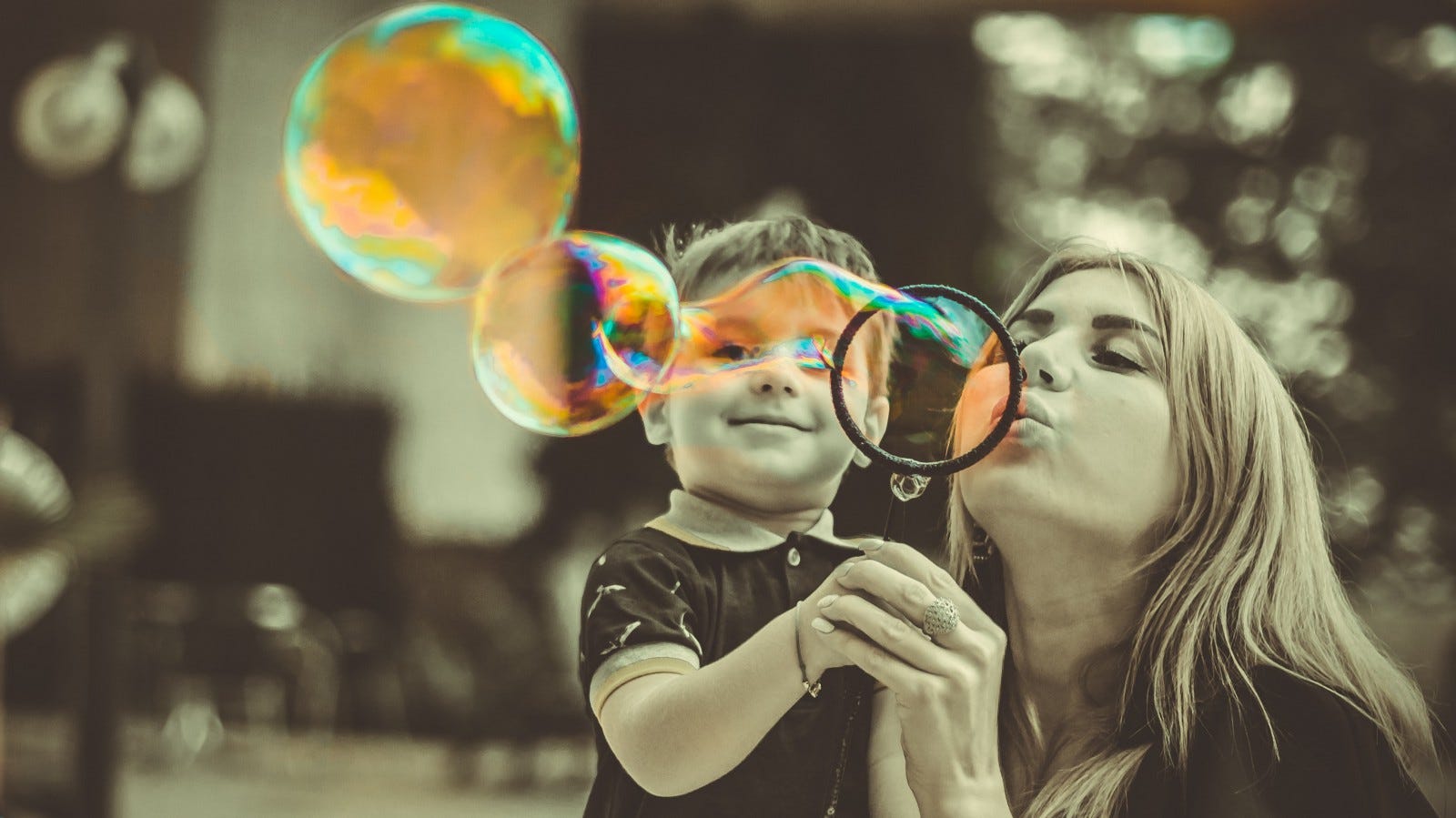
Breathing is vital and is crucial for an easy learning process.
Where and when? Always and everywhere
Where and when? Always and everywhere. This looks like an impossible assignment, but it is not. To build up confidence, you can practise on your own first. Before long you will want to practise in real life: with your family at the table, during a chat with your neighbour, … You can carry on with your ordinary activities while you practise. Contrary to what you might think, your attention does not slacken; instead you notice that you can focus and concentrate better. While you are teaching, practise being aware of your presence in the here and now and/or of your whole body with your feet on the ground and/or of your breathing. Chances are that in the beginning you will often have to fetch your attention back. By practising, you can keep it up for longer and longer and you learn to see which pupils are present and which are not, so that you can adjust your strategy.
You can carry on with your ordinary activities while you practise.
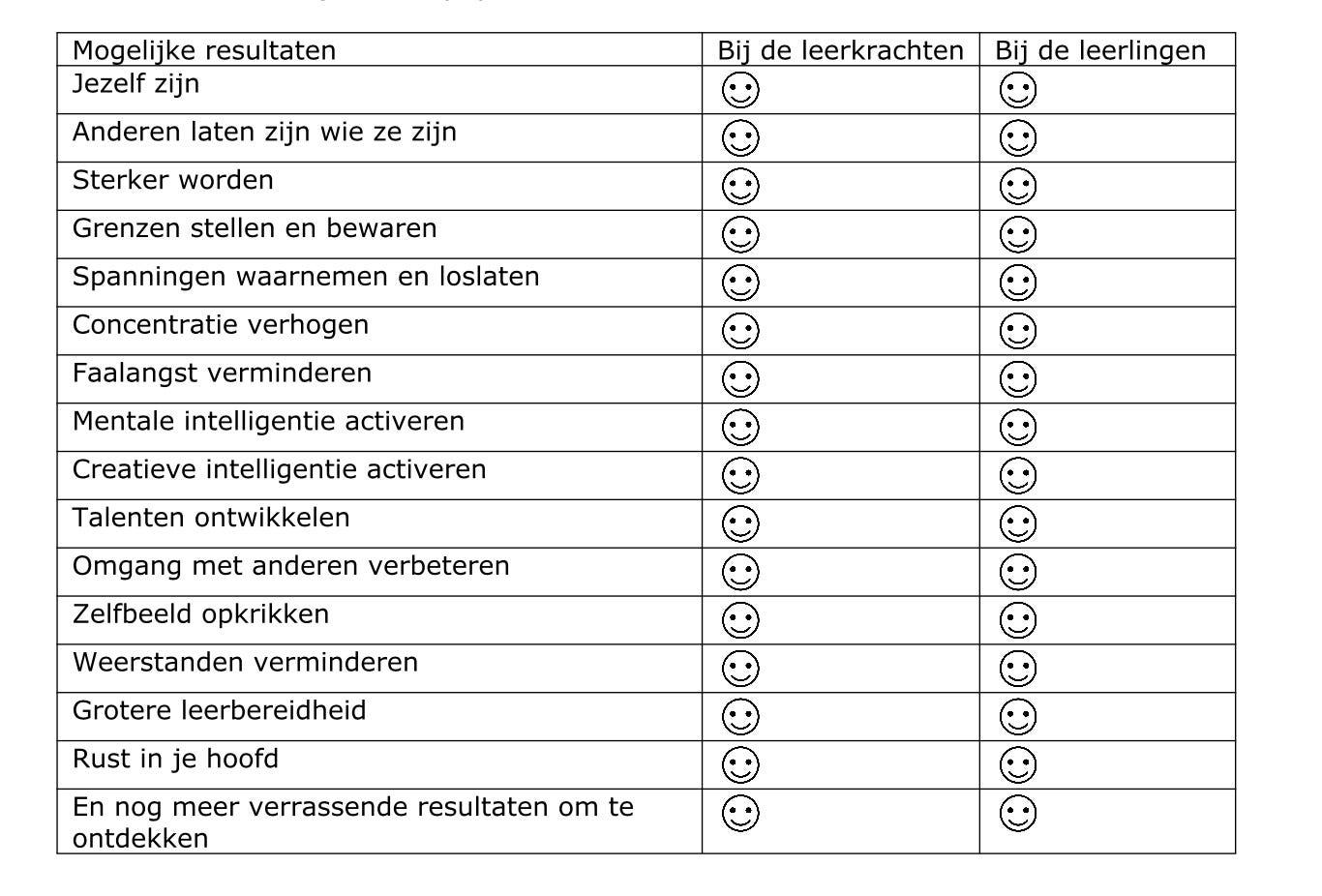
Possible results of applying Teaching by being
Consistently applying Teaching by being through your bodily and emotional intelligence yields results for which you used to have to take any number of steps, with varying success. The results reach beyond the subject areas and at the same time contribute to them.
Fun works. Your small inner experiences of success spur you on to keep going until they grow into shared experiences with your pupils. Enjoy the practising, the voyage of discovery and the results. Invite your colleagues to join in. Together your motivation grows and you inspire your pupils. Practise for at least three or four weeks in a row. Chances are that afterwards you will want to develop your skills in this further.
The golden place of the essence.
The features that go hand in hand with a crisis — fear, stress, uncertainty and survival mode — push you in the direction of (self-)enquiry into essential values within yourself and at school. Through your learning power you let go of old patterns and explore new possibilities, so that you develop strengthened powers and energy and your expertise moves upwards. The secret of it is to turn your gaze inwards in order to perceive who you are and what you wish to stand for in your life. The inner process of consciousness manifests itself through your creative intelligence, so that you walk your authentic path more fully, your inner freedom shows itself in the way you teach and you guide your pupils from their natural rhythm of living and learning. The insights from the recent health crisis have contributed to this. The wheel of being is your practical support. You, teacher, the golden raw material of the school, are the supporting bridge that can lead you and your pupils from a crisis towards boundary-pushing education in which the essence is given a golden place.
Hilde Van Bulck
hildevanbulck.com
[1] Van Bulck, De eigenwijze kikker, 2015, p 50 ; [2] p 105 ; [3] p 155 ; [5] p 122–123 ; [6] p 161–186 ; [7] p 94 –106 ; [8] p 165 ; [9] p 168 ; [10] p 175
[4] Schoolpraat, 2019, Emotional intelligence, p 8-10
About the author
Hilde Van Bulck is an author, speaker, transformer and systemic constellation facilitator. She is the founder and driving spirit of Samtati and the originator of Teaching by being. She has many years of experience in education, coaching and training at her fingertips, and she is nobody’s fool. She has specialised in systemic family constellations and educational constellations. She is known for her intense, high-quality trainings ‘beyond stress at school’ and is valued for the safe framework in which she works. She prompts reflection, inspiration, motivation and activation in order to bring education professionals and schools to their essence and their inner leadership. She goes right to the bottom of the question.
Her second book ‘De eigenwijze kikker, het geheim van lesgeven en opvoeden’ (The Headstrong Frog, the secret of teaching and bringing up children) is a book full of lived experience and concrete exercises for schools on the move. It was written to empower adults and children alike. Before that she wrote ‘De Nacht van ons leven’, a personal testimony about love and grief.
Inspiration to read
Brown, M. (2011). Het presence proces. Haarlem, the Netherlands: Altamira
Dutra, Y., & St.John, R. (2009). Be the hero you’ve been waiting for. United States: McNaughton & Gunn
Gunster, B. (2012). Lastige kinderen? Heb jij even geluk. The Netherlands: Bruna Uitgevers
Kokkelmans, A. (2010). Ademelfje… ben je wakker? The Netherlands: Kluitman
Rentenaar, T. (2016). Het ligt aan jou. The Netherlands: Bos-Tekst in uitvoering: www.tiu.nl
Dennison, P.E. (2014). Handboek Brain Gym — Energetische oefeningen voor kinderen met leerproblemen. The Netherlands: Panta Rhei
Purperhart, H., & Weel, R. (2014). Klas in balans — Het grote relaxboek voor het onderwijs. The Netherlands: Panta Rhei
Van Bulck, H. (2015). De eigenwijze kikker — Het geheim van lesgeven en opvoeden. Bodegraven, the Netherlands: Paris Books
Publications
Schoolpraat, (2019 ). Emotional intelligence: a new and valuable subject at school? p 8–10
Van Bulck, H. (2018). Creativity, a mechanism of release and visible creative power.
Van Bulck, H. (2017). Stay in your body! Self-confidence means being true to yourself.
Van Bulck, H. More publications on education.
Blogs
Van Bulck, H. (2020). Are we standing at the birthing bed of new times?
Van Bulck, H. (2019). Pupils bring society in through the school gate with them.
Van Bulck, H. (2018). Learning in safety. That is what three principles in education do.
Van Bulck, H. (2018). Free yourself from sandwich stress at school.
Van Bulck, H. (2018). Ten successful tips for conscious schools and conscious teachers.