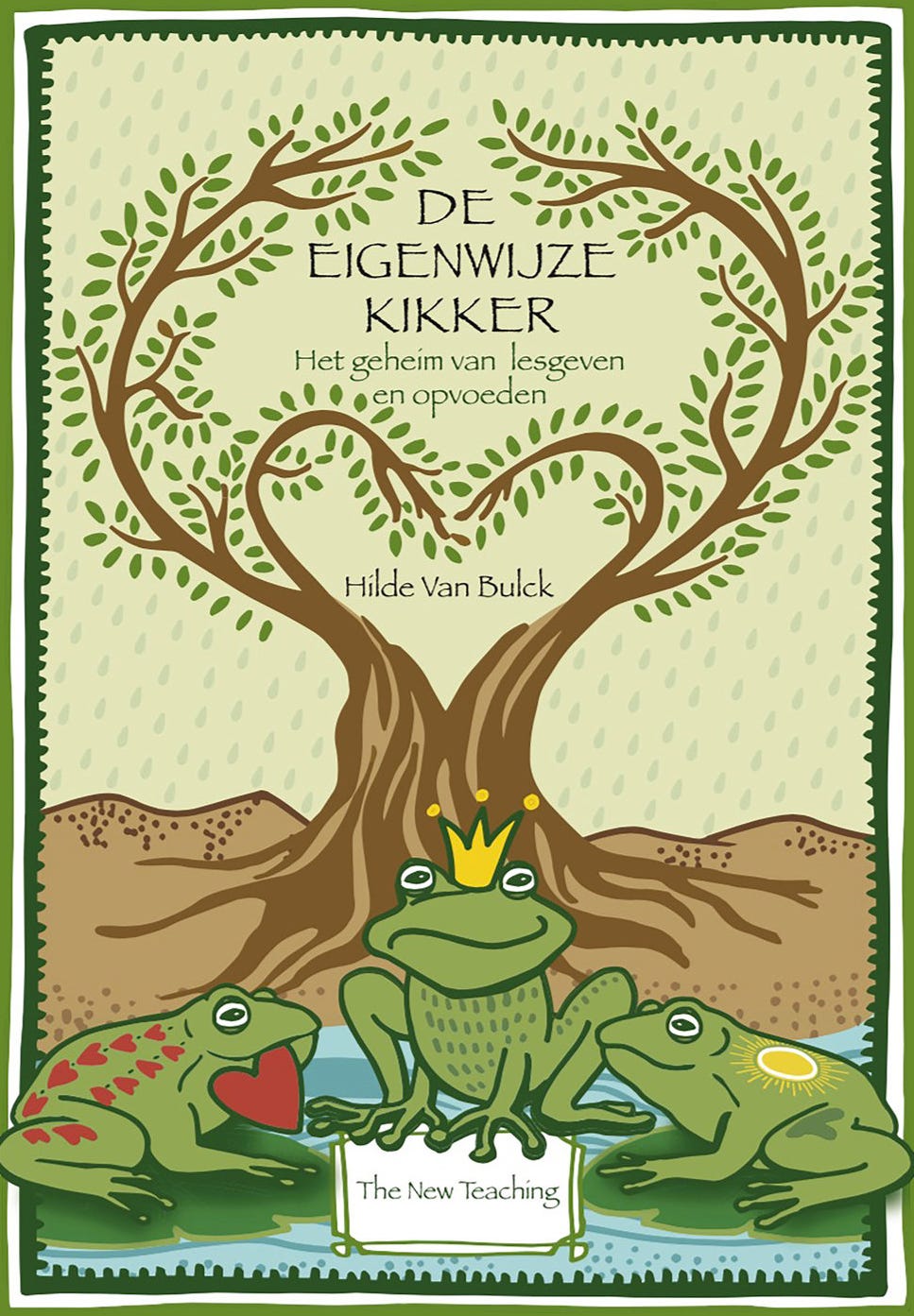
In 2015 my book ‘De eigenwijze kikker — Het geheim van lesgeven en opvoeden’ (The Headstrong Frog — The secret of teaching and raising children) was published by Paris Books, guided by author and publisher Geert Kimpen. Now, ten years on, we are celebrating a special anniversary. In this interview Geert talks with me about the importance of ‘learning to be present’, the heart of good teaching and good parenting. Because real presence not only changes pupils’ behaviour and learning results, it also opens new doors for approaching all kinds of challenges within education. This book offers inspiration to teachers, educators, school leaders and everyone involved in education.
In the book you will find:
- Real-life cases from everyday teaching practice.
- Practical exercises (‘frog leaps’) to strengthen yourself and your pupils energetically.
- References to systemic educational constellations.
- Use of the Wheel of BEING as a transformative tool.
Watch the video or read the full interview below.
Leap along into this candid conversation in which Hilde Van Bulck shows how one headstrong frog is still throwing off sparks in education ten years later. With nothing more than a conscious breath and a brave leap, she invites teachers and parents to let learning sparkle again. Do you dare to land in the here and now too? Click play and breathe along for a moment, or read it below.
Geert: I am sitting here with Hilde Van Bulck, the author of De Eigenwijze Kikker. And that is one of the very first books we published at Paris Books. And it is an everseller, a book that after 10 years still wins a great many fans and is still read a great deal. And to celebrate that tenth anniversary, I am having a little talk with Hilde. Welcome!
Hilde: Thank you.
Geert: Hilde, this book is about raising children. And judging by the title, it is a plea for ‘headstrong wisdom’.
Hilde: That is absolutely so. And it actually starts with the cover. As you can see, it looks like a children’s book, which makes adults say: ‘Ah, but that is not a book for me.’ And that is a radical mistake. And the headstrongness is already there, because the book is meant for adults. And they can then pass it on to the children.
Geert: Lovely.
Hilde: And that is where the headstrongness begins. And beyond that it works on two different levels. On the one hand there is your own wisdom, which is when you follow your inner wisdom. The frog in the book, for instance, follows his own path, his inner voice. He follows his own feeling and he is also willing to question systems. And that own wisdom, that source of it, we all possess. Both the pupils, the children, and the adults, the parents and the teachers possess it.
Geert: Yes.
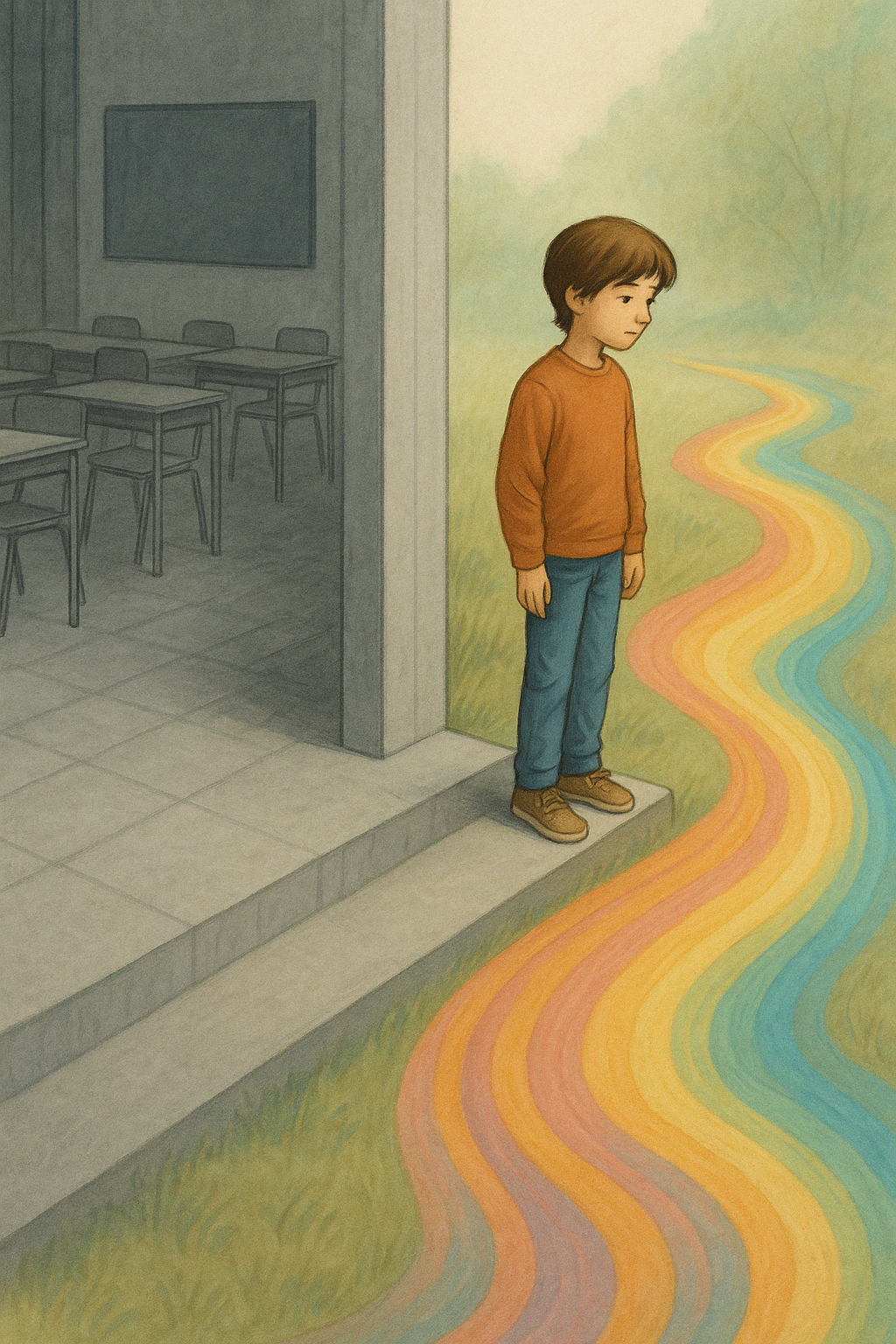
Hilde: And a second level of being ‘headstrong’ is ‘being headstrong’. You need a portion of headstrongness to put your own wisdom out into the world. But your own wisdom, being headstrong, is at the same time vulnerable and very powerful. And it is important for those children who have a hard time at school, so that they are given the chance to follow their own path, their own way of learning, their own way of perceiving something, and so on. So it is there on two levels. And it is not about the kind of headstrongness of ‘I am going to be obstructive for a change’ or anything like that. On the contrary. It is about not going against the current, but finding your own unique current. And that applies to children as much as to adults. But with this book I address myself first of all to the adults, so that they can pass it on to the children.
It is about finding your own unique current.
Geert: Lovely. Yes, you are of course a very idealistic educator, with centuries of experience in education, I am almost tempted to say.
Hilde: I think that is true, those centuries of experience.
Geert: But even so, in this day and age there are a great many children and young people who drop out, who no longer want to go to school. Since the corona period a great many children have ended up isolated as well. Do you have solutions for that, both for the parents and for the children and young people who simply cannot cope in education any more?
Hilde: I would first like to point back to the adults, because just look at what is happening in schools. It is not only the pupils who are dropping out, it is school leaders dropping out too, teachers dropping out. And that is an enormously big problem. Now, I do not believe in the one solution. What I do believe in is that if we start looking in a different way, a movement is created. And wherever there is movement, something is already changing. We often want instant solutions for those children who are supposedly dropping out. But they are not coffee. They are not instant coffee. So what is really needed is a process of consciousness. And processes of consciousness go step by step. But if we start looking differently, that process of becoming aware is already set in motion. So that is already very important to know.
On the other hand I would also like to say: the children are not dropping out. I really do want to say that very clearly. They are not dropping out. They are being pushed out.
Geert: Out of education?
Hilde: Yes, they are being pushed out.
Hilde: And the same thing happens again with the adults. So I always draw this parallel. Because the system does not connect with what the children need deep inside. And I even dare to say: need at soul level. Yes. So there is so little room, room to breathe, room to move. And many children feel they are in a straitjacket. Admit it yourself: if you were in a straitjacket, would you feel any urge to learn? No, you would feel the urge to step out of that straitjacket. And so the pupils are actually pushed out by the school, because the system is not tuned to the pupil; instead the pupil is expected to tune to the system. And that is an outdated way of thinking. It may have worked once, but it does not work any more.
How are you going to keep the connection with your natural being if you sit in a classroom all day?
Another thing is that schools pay a lot of attention to the cognitive. And there is nothing wrong with that as such. But what about all the rest? What happens then? Where is the attention for the body? Where is the attention for the world of feeling? Where is the attention for intuition? For movement? For the connection with nature? How are you going to keep the connection with your natural being if you sit in a classroom all day? That is impossible. And also, last but not least, because that is really where I always want to get to: where is the room for children’s energetic and spiritual consciousness? Because those children are enormously open to that and are in contact with it. And I do not see that room in a school.
Geert: No, no. But still, for the time being the system is what the system is. And children are dropping out. My own daughter is someone who came completely unstuck in education. A very headstrong child. What can we do with those children? You have these beautiful little figures here. I take it that is one of your tools?

Hilde: Yes. I am going to show you something with the figures in a moment. But I also want to say, first of all still about the book, that in terms of solutions the book invites you to be far more present with yourself. And I have developed a tool for that. That is the Wheel of BEING. The Wheel of BEING is really a compass for teachers, for adults, for parents, to learn to be more present in who they are. It consists of eight axes. And when people practise with it, they come free of the merely cognitive and come into contact with the larger field of themselves. So that source of inner wisdom is called upon. And when teachers have integrated that and bring it into the classroom, the pupils will simply come along with them. But careful, there is a pitfall in this. Because if they think: ‘Ah, I will just make that knowledge, the knowledge of that Wheel of BEING, my own, and then it will work in the classroom as well.’ That is not how it goes. Because pupils have incredibly fine little antennae. And they immediately feel whether it is knowledge for you, or whether it is something you have truly lived through.
Geert: Yes.
Hilde: And if it has not been lived through, they will not accept it. They will push it away. Yes. So that being present, that is one pillar, I would say, of how I would approach it. And the other way of looking at these problems is through systemic educational constellations.
Children are the most finely tuned barometers you can imagine. They detect every cloud, every raindrop, every storm, every area of high or low pressure in the emotional weather of their teachers, both as individuals and as a team.
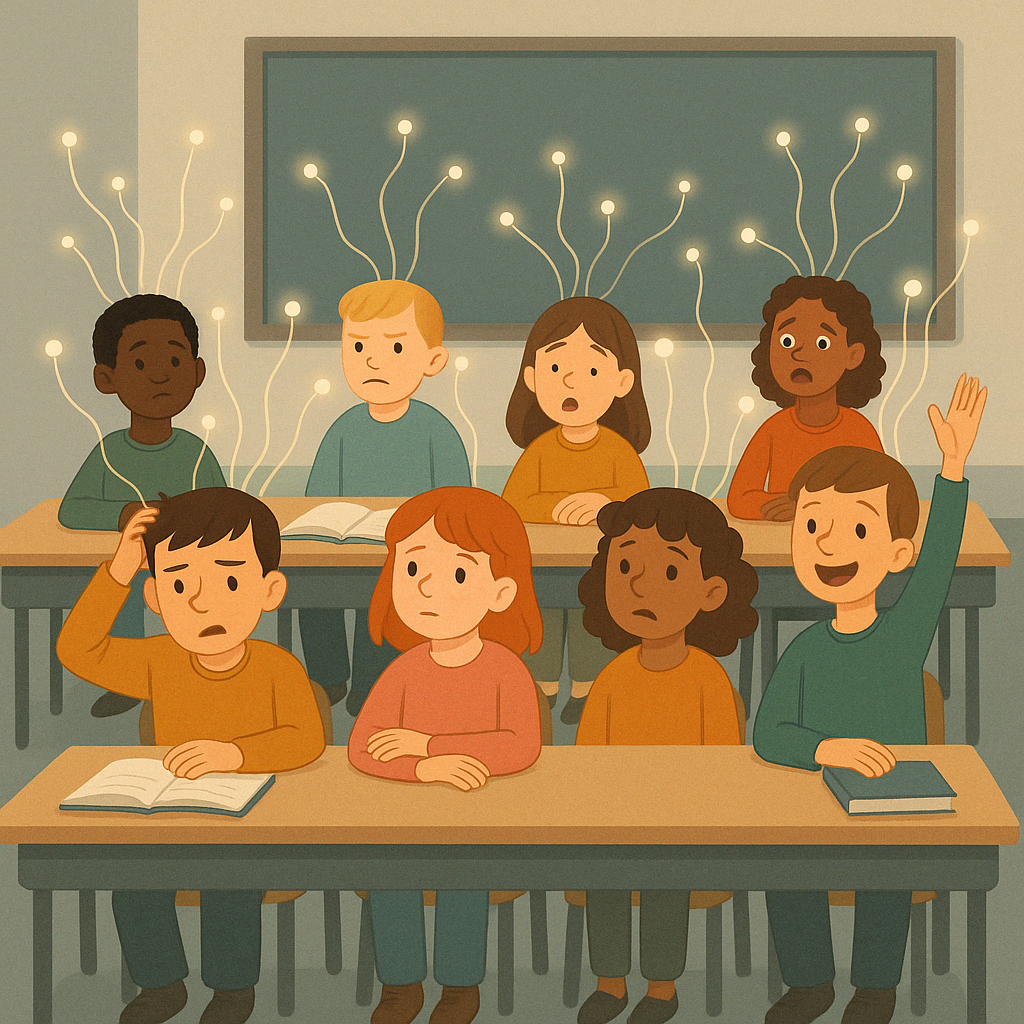
As I said, those children have very fine antennae and they always perceive whether something in the adults is in balance or out of balance. Whether something in the system is in balance or out of balance. They perceive that unerringly. And so they actually walk around with little rucksacks of untold stories from their own family system, but also with little rucksacks of untold stories from the history of the school. But schools never give that a thought. They bring those rucksacks with them to school. And when they start showing difficult behaviour, or start playing truant, no longer want to come to school, become ill, and so on, that is really a signal for the whole system. Because in essence those children are not being difficult and are not really ill. They just want to bring a message. But that is at an unconscious level. They cannot — if you ask those children: ‘Why are you behaving like this?’ or ‘How come you are ill?’ — they will not be able to give you an answer. But it has to do with underlying dynamics of the family system on the one hand and of the school system on the other. And schools do not look at that. They look at the surface, but with systemic constellations we look beneath the surface, we get to see what is really going on. And I would like to give an example here with those little figures, if I may?
Geert: Please do.
Pupils and teachers walk around with little rucksacks full of untold stories of the school.
Hilde: I have already set it up a little, but not entirely. When we do such an educational constellation — there was a teacher from the fifth year of secondary school. For years she had not had a single problem with discipline or anything. It all came naturally. And at a certain point she has a class in the fifth year that she can do nothing with. In which there is one pupil who triggers her enormously, whom she cannot handle, and where the other pupils regularly laugh at her. So this woman, who was of a certain age after all, was rather in shock that this was suddenly happening. And she wanted to investigate how that came about. Because adults go through the same processes as children. They often forget that. So what did we set up? Here you see all these little figures. They are in fact representatives of the pupils. They are not all the pupils, but one figure stands for several pupils. Now, in reality I do this live, not with figures. That is possible, but I do it live with a number of people who have gathered around it. So that is her class group. That is the teacher who has the question. And this is the pupil she has such a problem with. There are little eyes on them. Perhaps you can see them? That is the direction of looking. And I ask her to place that pupil in the class as she sees it. And she does that intuitively. People do try to reason it out, but that reasoning does not work. It simply happens intuitively. And she places her with her direction of looking over there. While all the other pupils are standing with their direction of looking over there. And then I ask: ‘All right, that is good. And now place yourself.’ You see the little eyes again here. And she places herself with her back to the class.
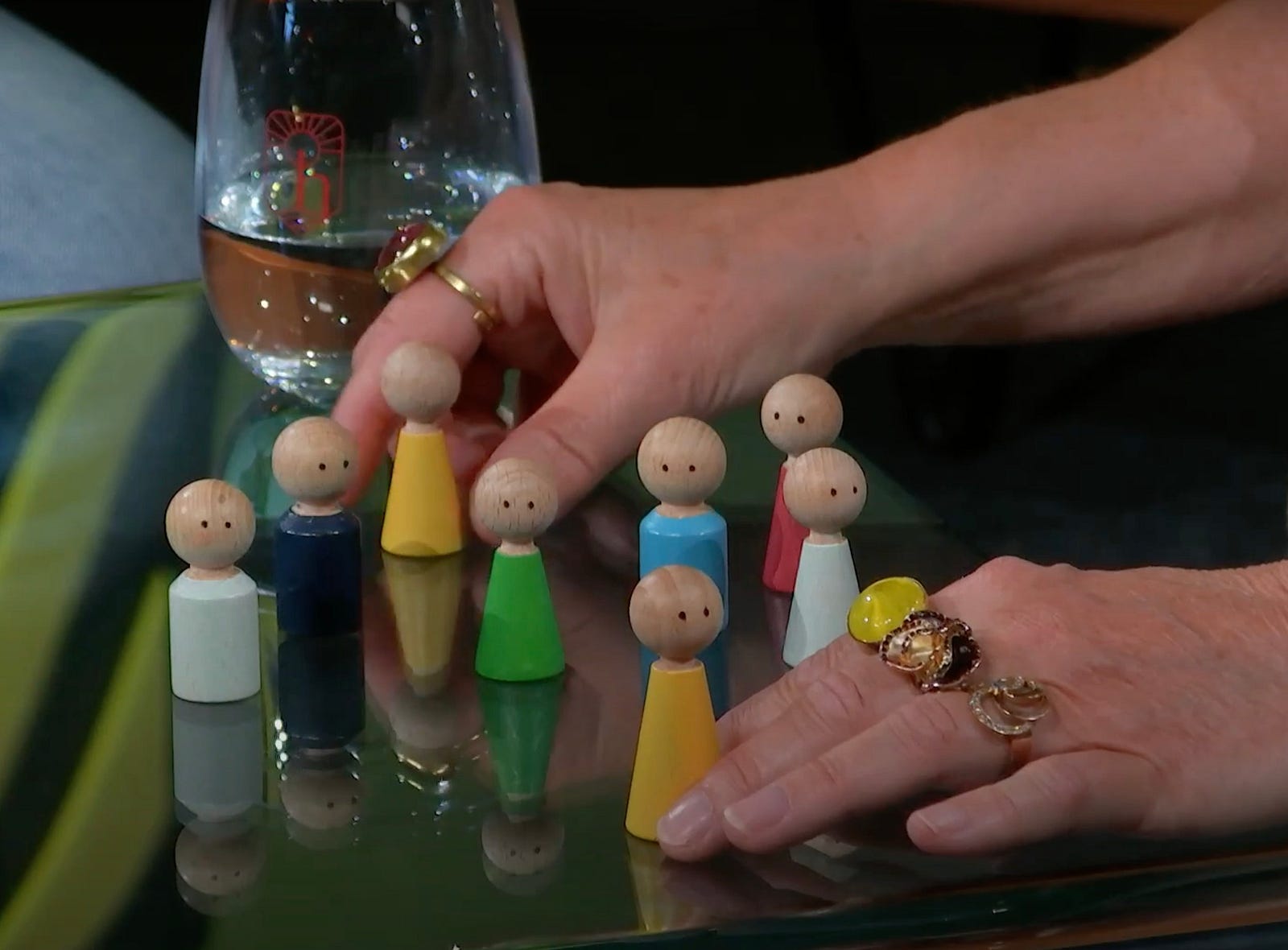
Geert: Does not seem very healthy to me.
Hilde: There you are. You react immediately. You know straight away: something is going on here. But that teacher, she also knows that something is going on, but she cannot put her finger on it. By reasoning it out she cannot say: ‘Ah, that is the problem and this is how it must be solved.’ And what did we then see in the constellation? That she — look at that same colour here as well — that she and that pupil are both doing the same thing. That pupil is looking away out of the class, she does not want to follow the lesson. But the teacher does not want to give the lesson. Do you see that? That pupil is absent from what is happening in the group and is in fact looking towards themes that are at play in the family system. But the teacher, in this case, also has themes that are at play in her family system. And that is a very important insight. When themes are at play that have not been processed in the family system, that have not been resolved emotionally, a child cannot focus on subject matter. Let me give a more concrete example that many people will recognise. Suppose one of the parents or brothers or sisters or another family member has no zest for life, no longer feels like doing anything, finds everything heavy and difficult, and really has no life energy left, then the child will perceive that at an unconscious level. So at an unconscious level — yes, I always have to add that it is unconscious — but out of a great deal of love it will care for that family member. And when he then has to go to school, he says: ‘Subject matter? Matter? No, life comes first.’ When life is disturbed somewhere, you cannot learn. And once teachers or schools understand that and can give attention to the process of living, you will see that they get the pupils back on board. And very quickly. It need not take months. They do not need months of therapy for it. By learning that presence with yourself, as described in De Eigenwijze Kikker, with the Wheel of BEING. So by anchoring that presence, you can also teach it to the pupils. They will be able, even when something is difficult at home, to be present at other moments in what is called the ‘here and now’, in the place where they are then, at school for instance.
Geert: Yes.
When life shows a disturbance somewhere, one cannot learn.
Hilde: So life always comes first. If that is not the case, then the pupil — and the adult too, so the teacher as well — will turn away from the job or from the learning process.
Geert: Lovely. And lovely to hear too that it can be solved relatively simply and quickly.
Hilde: Yes, if you are willing to turn your gaze inwards and to look at your wider energy field. So at your inner source. Yes, I am already closing my eyes, because I can feel that inner source doing its work as well. Children can make contact with it very easily too, but not if they are judged on it, not if they are rejected in it. So it is important to be a headstrong teacher who dares to put that kind of thing down in a school, first of all, and pays attention to it first, and takes the pupils along in it. And you do get your pupils on board. I guarantee you that. Because I experienced all of it myself. I did not invent it. I have — it arose by itself in my own classrooms. And then I worked it out in that book.
Geert: Yes, lovely.
Hilde: Then I saw that the behaviour changes and the results change too.
Hilde: I want to say one more thing about that systemic way of looking. When a pupil shows such behaviour, or other behaviour, which can take all kinds of forms, that pupil is not only working for himself. He gives a signal about himself. He says to the school: ‘Things are not going well with me.’ He says something else to the school as well. Namely: ‘In the class there is another pupil who is doing even worse (than I am), and who is not being seen. But that one will not kick up a fuss. Shall I kick up a fuss instead?’
Geert: All right.
Hilde: And he says something else too. He also says: ‘In the school as well there is an imbalance at a certain level. Either with the teachers, or with the teaching team, or with the school leadership, or in the school system.’ So he gives more than one signal. And then let us not forget everything that is going on in society right now. That is worked through in schools too, both by the adults and by the children. It really is not a children’s book. It is a book for adults, so that they can learn to make these things their own. To gain a different radiance, a radiance of life, and to set learning in motion from there.
Geert: Lovely and very important. I think our children in education would benefit enormously from taking this book in, because people with the talent to deal with children so carefully and so lovingly remain rare birds in education. Your book has already touched a great many hearts, set a great deal in motion in those 10 years. What is the most beautiful reaction you can remember?
For the first time I see that my son is not a problem child, but that he is showing something I had forgotten myself.
Hilde: Yes, I find it hard to pick out one reaction, because there have already been a great many beautiful reactions, both spoken to me directly and by email, and so on. What gives me a lot of pleasure is that there are teachers who get to work with the exercises from the book, who have also taken a training course in it, or who make their own teaching materials to work with the children. Because at the beginning I talk about a frog of decisiveness and a frog of the heart. And then they make materials to go leaping in the classroom as frogs with decisiveness and with heart. You need decisiveness in order to want to learn your lesson. But you need the heart just as much in order to be able to learn or to teach.
Something else that has certainly touched me is those people who get to work with the Wheel of BEING. There is even a head teacher who had the Wheel of BEING enlarged, put it in a frame and hung it on a wall in his office, in order to — and he said it was in order to be reminded constantly to stay properly present, because it gave him a different contact with his staff. So the field of that book lives on much further. That really does me a lot of good.
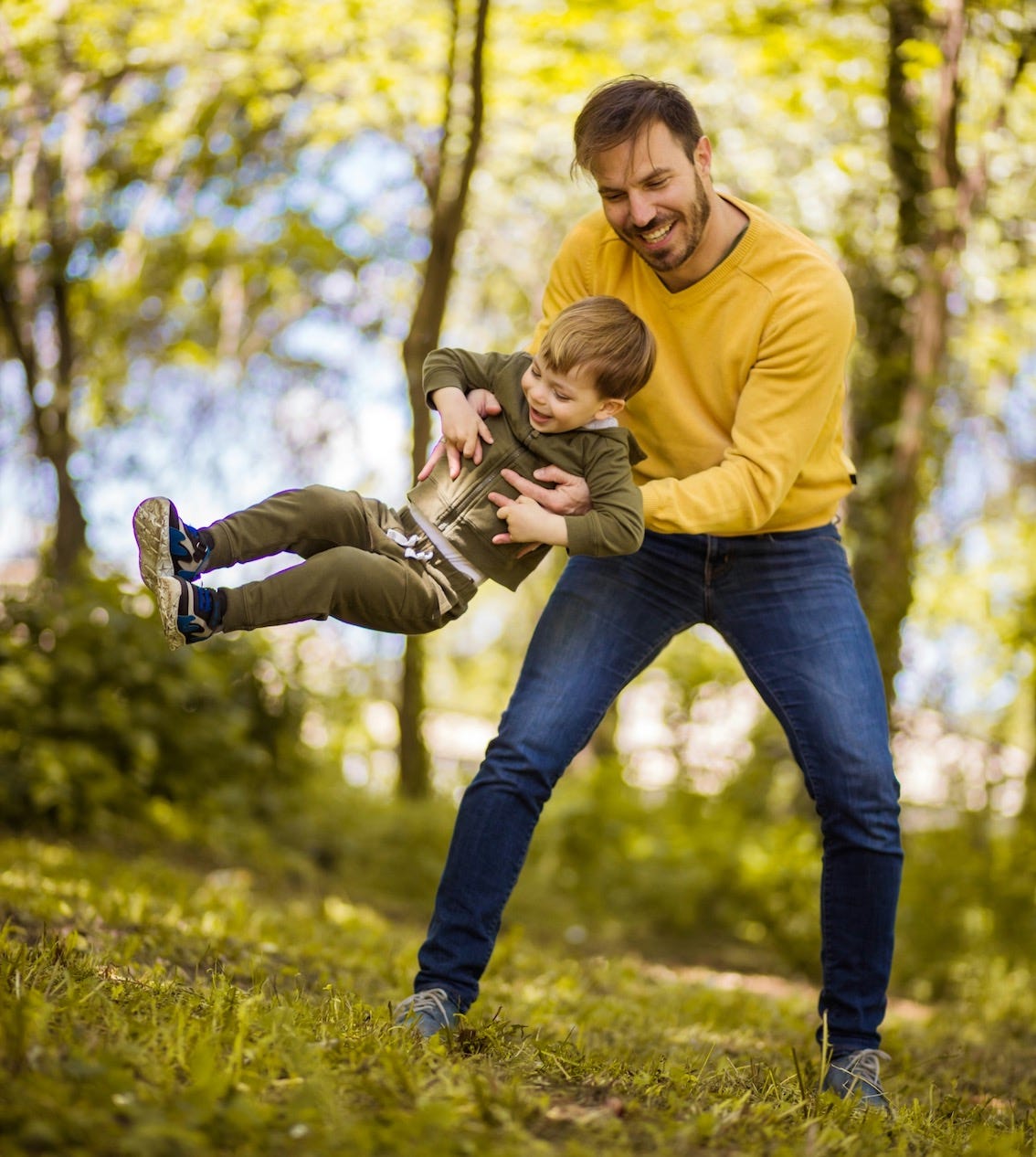
And then something very intimate too, I find: a father who said to me: ‘For the first time I see that my son is not a problem child, but that he is showing something I had forgotten myself.’ How important is that? To see your child not as a problem child, but as a child. The child immediately starts behaving differently. Yes, so that is a small selection of the reactions I have had over the years.
Geert: Yes, wonderful. Hilde, we are very proud that we published this book and proud that you are still bringing it into this world with so much verve. We are already at the fourth print run of this book. And I am sure that in the coming 10 years at least four more print runs will follow.
Hilde: That is what we are going for.
Geert: Ladies and gentlemen, this one comes highly recommended: De Eigenwijze Kikker by Hilde Van Bulck.
Hilde Van Bulck
Hilde is a soul-driven trainer in systemic and energetic work with years of experience in education, constellation work and presence consciousness. She helps leaders and their teams to turn problem situations into opportunities for growth. She gives training courses, supports trajectories, guides people in their personal and professional development and writes about the richness of life, including its paradoxes.
Would you like to order De eigenwijze kikker?
PAPERBACK EDITION
Standaard boekhandel
Bol.com
Acco
E-BOOK EDITION
Standaard boekhandel
bol.com