

I don’t belong anywhere: for me, that is the complaint I hear most often from clients and course participants who are looking for help on their path. They see the situation as hopeless, but is it really? What can you do? Who can you be to rise above the painful feeling that comes with not belonging anywhere?
With a voice steeped in loneliness
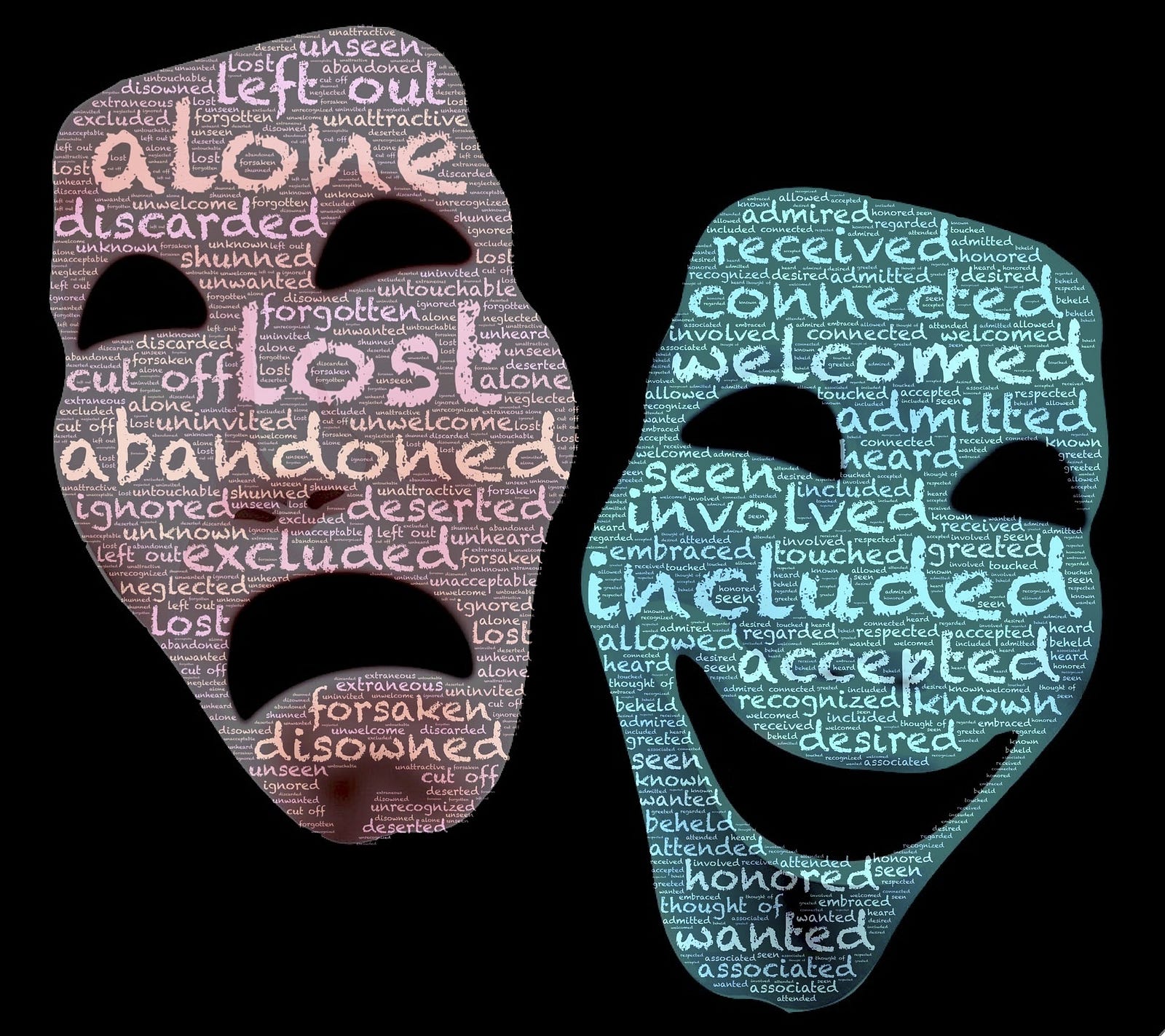
I have often heard and seen it in my course participants and clients. They are convinced that they don’t belong anywhere. Not in the family they come from, not in their circle of friends and not at work. They tell me in a voice steeped in loneliness and despair, and in the question of whether they should even be here at all. When I ask them what they mean by that last part, they look at me as if they can’t believe I don’t know what they are trying to say. I do know. Very clearly, in fact, but I want to hear them say it themselves. Because when they say it out loud, I can perceive where they are in their process. They wonder whether they should really commit to their life on earth. What is the point? I don’t really want to be here any more. I don’t belong anywhere anyway. Everything here is so hard. As I look at them and listen to them, I feel that it is time for them to change perspective.
You are not alone
If you don’t feel understood or welcome anywhere, if you don’t feel seen or heard, or if you have the impression that you are the odd one out, and this happens to you often, it becomes an unshakeable belief that rules your life. You think you are the only one, but nothing could be further from the truth. Once a conversation goes beyond the superficial, you come across this feeling in almost everyone. Everyone knows it. So how is it that one person can cope with it while another is weighed down by it?
‘Something isn’t right and it’s my fault.’
We are all born highly sensitive
Even before you saw the light of day, you could perceive in the womb the atmosphere in which you were growing into a baby. You saw the light of day with finely tuned sensors, and your antennae worked tirelessly. You perceived when the atmosphere was pleasant and calm, but also when your surroundings seemed harmonious while discord was at work beneath the surface. You yourself were bathed in a field of light and love. That was all you knew, but you sensed that something wasn’t right. You kept on sensing it and took it on yourself. At some point you decided that it was your fault.

‘Why do you always do things differently from everyone else?’
I know the feeling
I know the feeling of not belonging. When all the children shouted, ‘Yippee, spaghetti,’ or ‘yippee, chocolate mousse,’ I wondered why they were so excited about it. Every single one of them. It seemed as if I was the only one who didn’t think spaghetti and chocolate mousse were the height of a good meal. I have lost count of how often I heard: ‘Hilde, you really are a special one, you know.’ The way it was said sometimes sounded like a compliment, but one with a little judgement attached. Mostly, though, it sounded like ‘You disobedient child.’ Or ‘Why do you always have to do things differently from everyone else?’ Whereas I actually felt that I wasn’t doing anything differently at all, but was simply keeping a little in the background. When the bullies at school were choosing their bullying entourage to make life hard for someone, I could never go along with it. I didn’t understand why everyone did what the loudmouth had in mind. I didn’t belong, and just as well. As a child, as a teenager and even more so later on, I asked a great many questions. I got no answers, neither at home nor at school. There were teachers who deliberately ignored my raised hand. Just like you, I could give countless examples, some fairly innocent, others very deliberate.
A shattered self-image
It is a double movement. On the one hand you belong somewhere, and on the other you feel that you fall outside the group, that you are the only one who sees things differently. ‘Not everyone has to think the way you see it,’ I was often told, as if that had ever been my wish. Certainly not. I simply wanted to share, to check things with others, but often a figurative red stop sign was held up in front of my face. It does something to your self-image. After a while it crumbles. Is it me? Am I not good enough? What am I doing wrong? Why am I not like the others, and why don’t I do as they do? You feel bad, rejected, not clever enough and sad. Doubts take over. Your sense of safety is at stake. Everyone seems to know ‘it’ except you. Alleen op de wereld by Hector Malot is a book I understood very well back then.
Create your own system
Fortunately, there are always signposts close by to help you. A former colleague who taught German and saw me struggling with the system gave me a golden piece of advice. He framed it with sayings by a German philosopher whose name I have long since forgotten. His advice, however, still rings loud and clear in my ears years later. ‘If you can’t find your way in this system, if you can’t thrive in it, then perhaps it’s time to start your own system — one that is entirely yours. Separate from this system. There’s no point in continuing to adapt. You can build your own system exactly the way that suits you. Then you’ll come into your own more. You can be more yourself.’ Now that was a whopper of a change in perspective. I had never been given advice like that before. As if a light had switched on in my head, I took his advice to heart and — most important of all — acted on it too.
‘The road to a greater evolution is always preceded by the breaking down of all other roads.’
The puzzle takes shape
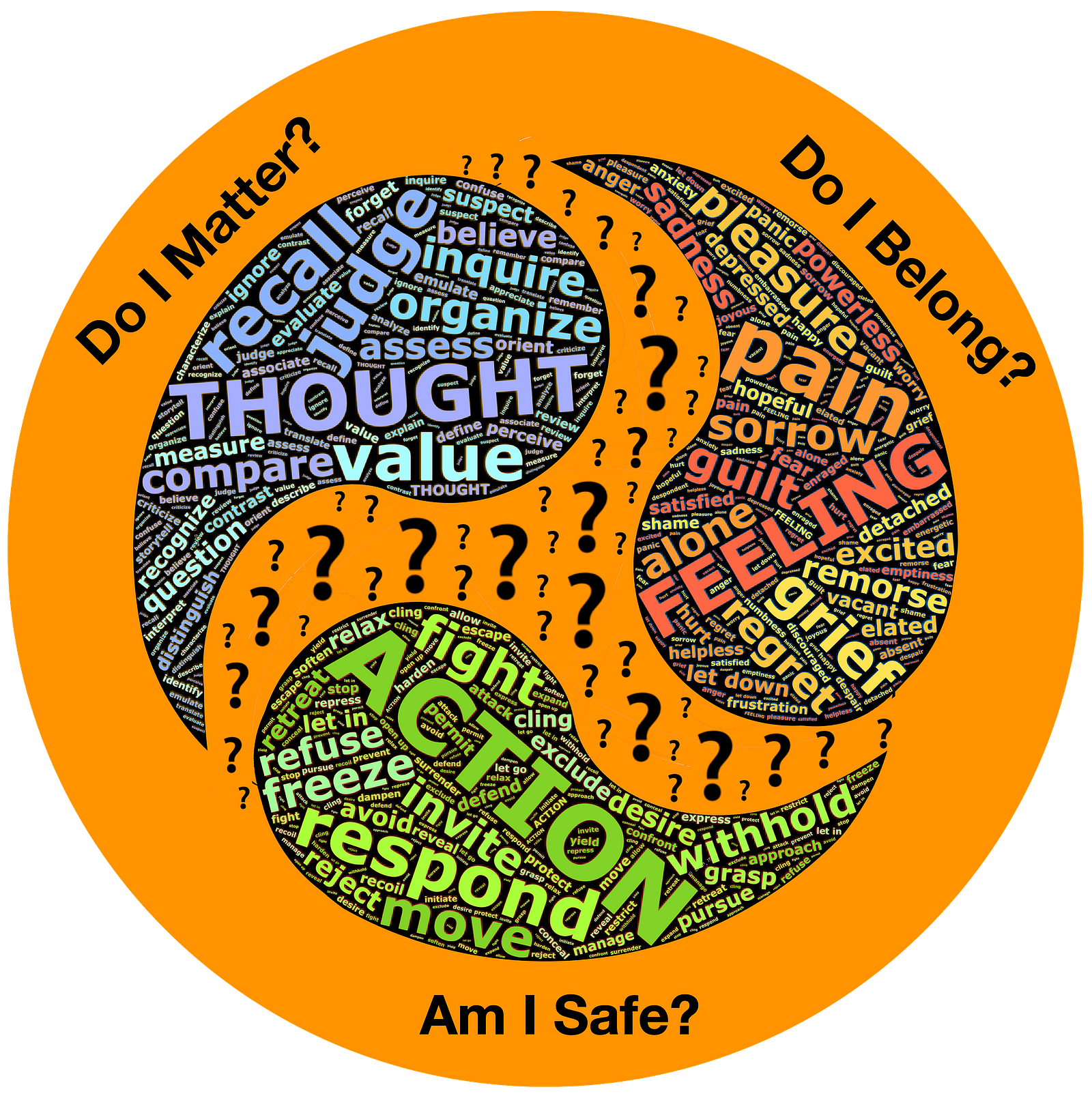
I could make an extensive analysis of why you come to feel separate. I would rather show you a few avenues that lead you towards connectedness. You cannot improve or change any situation if you keep looking at it in the same way. So you will have to break up your old roads and clear away the rubble. Only then is growth possible. So you will have to take a close look at yourself, your beliefs, your feelings and your actions, and bring them into balance. Have to? You don’t have to do anything, but then nothing will change either. It is time for a new perspective, so that you can lay out the puzzle of your life.

Outsiders grow into remarkable adults
There are plenty of examples, both in history and around you, of people who were at odds with their surroundings and felt like an outsider or a misfit, yet built an extremely successful or remarkable life. Precisely because they were different. Think of Elon Musk or Tom Waes — to name two completely different individuals. That is the good news. It is precisely because you feel that you don’t belong that you go in search of new paths and new insights that were previously unknown to you. The opposite is learning to adapt, which will lead with absolute certainty to a dissatisfied existence. As an outsider you make unconventional choices and set out to explore the world of possibilities. You need strength, daring and courage to go beyond the ‘normal’. The results, however, will please you. The road to a greater evolution opens up.
I AM, dynamic contact with my source
Most important of all, however, is that you take responsibility for yourself and find the way inwards. It is the way that always makes you feel connected rather than separate, regardless of whether you are welcome with a particular individual or group. Becoming aware of the wider consciousness of your I AM presence lifts you out of the belittling beliefs that you are not allowed to exist. You experience that they are illusions that keep you away from the path on which you joyfully walk through your life. Don’t simply brush this aside. Look for the solution within yourself. Find strength, love, wisdom, light, intelligence, healing and more. Your I AM is like a compass that always shows you the way and frees you from the beliefs that have kept you small.

A glance over your shoulder to look ahead
During the preliminary conversation for a family constellation, the feeling of I am different, I don’t fit in here, regularly rears its head. Again, we don’t make an extensive analysis of the causes. We let the field, which works at soul level, show where the uneasy feeling originates. Usually it is something you carry from a more distant past and that, in essence, does not really belong to you. We literally look over our shoulder at what was, in order to take and leave what was, to breathe through it and then to turn our gaze towards our own life. A greater sense of connectedness is your reward. Your radiance changes, becoming more loving and more attractive. It is up to you to live this result in your life and to receive its wonders.
Hilde Van Bulck


